Oosterpark and Slavery Monument
Oosterpark is a favourite picnic spot at weekends. It is also popular with cyclist and walkers. The park abounds in statues of which the Slavery Monument is the most famous. Oosterpark is located just outside Amsterdam centre but still close enough to go there for a stroll. The park was designed in English garden style. As Oosterpark was laid out at the end of the nineteenth century the trees are now fully grown and the park is very rural.
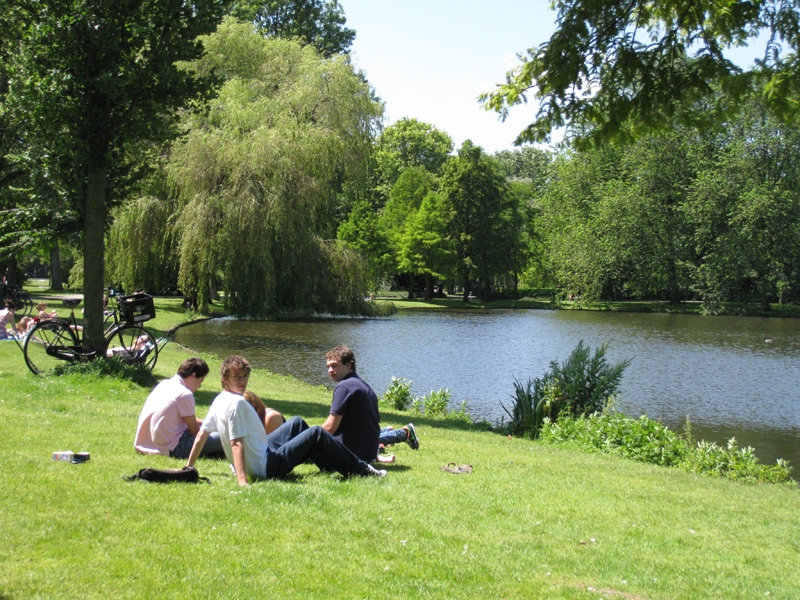
Oosterpark a Park for Everyone
Age-old trees, picnic meadows and ponds with swans and ducks and statues dotted all over – Oosterpark in a nutshell. Go for a brisk walk, a bike ride or put on your inline skates. Oosterpark is the perfect place to laze away an afternoon while the children are playing on the swings and glides in the playground.
Come on Sunday afternoon at 1:00 PM, step onto the speakers’ stone, and have your say. Free Wi-Fi is available around the bandstand and the paddling pool. Oosterpark was created at the end of the nineteenth century as a public park; a park for everyone in Amsterdam, and it remains so today.
Paradise for Birdwatchers
Birdwatcher can spot grey herons and green parrots. The parrots are not endemic but they live in many Amsterdam parks. The story goes that one day someone set free a couple of green parrots and since then they have multiplied. The park was laid out at the end of the nineteenth century as a park for the people. That is what it is until today: a park for everyone.
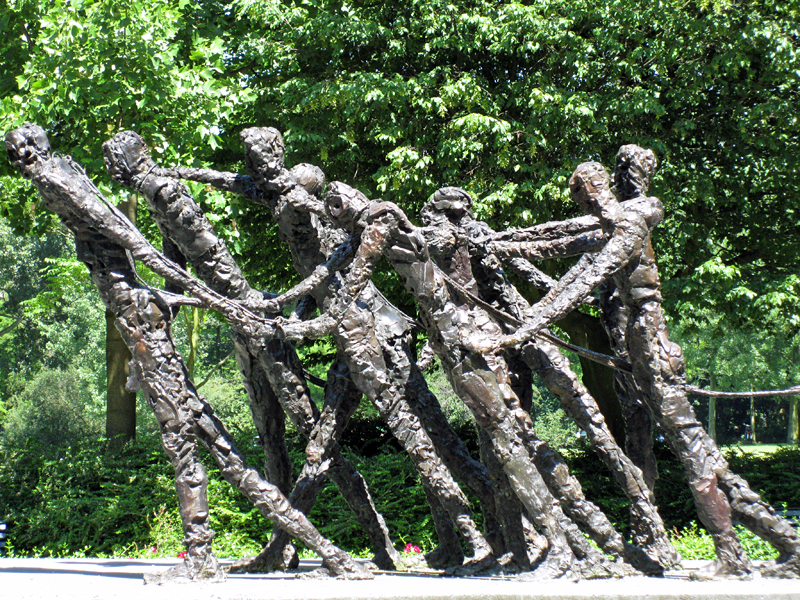
The National Slavery Monument
The most important statue in Oosterpark is the Slavery Monument designed by Suriname artist Erwin de Vries. It consists of three parts – the past – the present – the future – and commemorates the abolition of Slavery in the Netherlands in 1863. Chained people represent the past. The present is represented by a person drilling through a wall. The future is a woman reaching for the sky, symbolizing freedom.
Queen Beatrix, after her abdication Princess Beatrix, unveiled this monument in 2002 in the presence of only a handful of dignitaries. The public were kept at bay which caused considerable frustration among Dutch people from the Antilles and Suriname. Every year on 1 June a commemoration wreath-laying ceremony is held in front of the monument. Everyone is welcome!
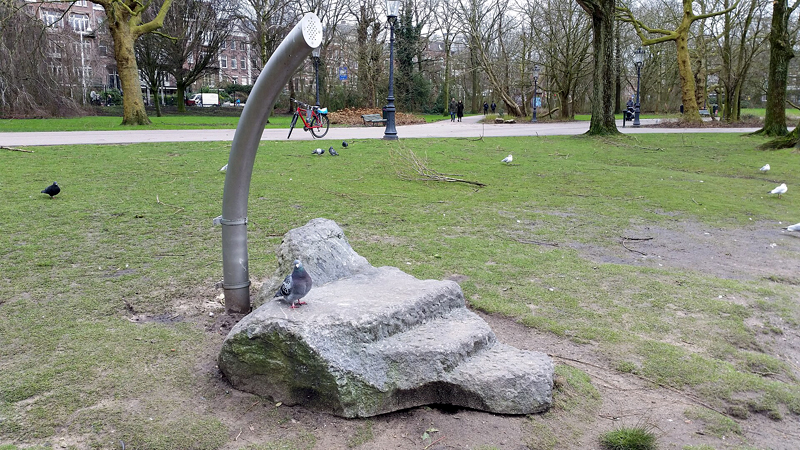
Speakers’ Stone in Oosterpark
Origin of the Speakers’ Stone
Since 2005, Amsterdam, like London, has had a Speakers’ Corner. The idea arose after the murder of Theo van Gogh, who was killed near Oosterpark. The reason for the murder was that film producer Van Gogh had released a controversial film criticizing Islam.
Freedom of Speech on the Speaker’s Stone
The Speakers’ Stone consists of a concrete block with an inscription of Article 7.2 of the Constitution: freedom of speech. Anyone can stand on the stone on Sunday afternoon at 1:00 PM and have their say.
Next article: Rijksmuseum Garden, unexpected gem in the heart of Amsterdam
Previous article: Begijnhof, an oasis of peace and quiet